
Peachtree City Periodontist Guide
Quick Answer
Periodontal disease (gum disease) is an infection that damages the gums and bone supporting your teeth.
Early stages can often be treated without surgery, but advanced disease may cause teeth to loosen or fall out. When teeth cannot be saved, a periodontist can rebuild the area using dental implants.
Patients in Peachtree City most commonly notice bleeding gums, gum recession, or bad breath before diagnosis — but bone loss often begins long before symptoms become obvious.
What Is Periodontal Disease?
Gum disease is a progressive bacterial infection that destroys the structures holding your teeth in place.
It usually starts when plaque accumulates along the gumline. The body reacts with inflammation, and over time the infection spreads below the gums and into the bone. Once bone support is lost, teeth may shift, loosen, or require removal.
Many patients are surprised to learn they have advanced disease because it often develops painlessly.
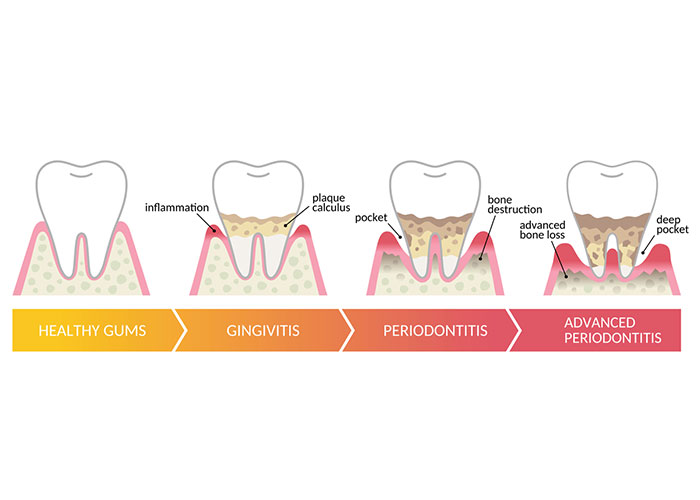
The Stages of Gum Disease
1. Gingivitis (Early Stage: Reversible)
- Red or swollen gums
- Bleeding when brushing or flossing
- No permanent bone damage
At this stage, professional cleaning and improved home care usually resolves the problem.
2. Early Periodontitis
- Gums begin pulling away from teeth
- Small pockets form around teeth
- Early bone loss begins
Treatment typically involves deep cleaning (scaling and root planing).
3. Moderate Periodontitis
- Noticeable gum recession
- Deeper pockets trapping bacteria
- Teeth may feel slightly loose
This stage often requires specialized periodontal therapy.
4. Advanced Periodontitis
- Significant bone destruction
- Tooth mobility
- Infection or abscesses
- Possible tooth loss
At this stage, teeth may need removal and replacement with dental implants.
Symptoms That Mean You Should See a Periodontist
You should schedule an evaluation if you notice:
- Bleeding when brushing
- Persistent bad breath
- Receding gums
- Teeth appearing longer
- Spaces developing between teeth
- Loose or shifting teeth
- Pain when chewing
Loose teeth almost always indicate bone loss, not just a gum problem.
Dentist vs Periodontist: Who Should Treat Gum Disease?
A general dentist often detects gum disease first, but a periodontist specializes in saving teeth and rebuilding bone.
You likely need a periodontist if you have:
- Bone loss on X-rays
- Gum recession
- Deep periodontal pockets
- Loose teeth
- A failing bridge or crown due to gum disease
- A need for dental implants
How Gum Disease Leads to Dental Implants
One of the most common causes of tooth loss in adults is untreated periodontitis.
Typical progression:
- Chronic inflammation damages bone
- Tooth becomes loose
- Tooth must be removed
- Bone shrinks
- Implant replaces missing tooth
A periodontist treats both sides of this process:
- stopping the infection
- rebuilding lost support
In many Peachtree City patients, we first control the disease, then place implants after healing.
Can Teeth Be Saved, Or Will I Need Implants?
Every case is different.
Teeth can often be saved when:
- Bone loss is moderate
- Infection is controlled early
- Patient maintains cleanings
Dental implants are recommended when:
- Bone support is severely compromised
- Tooth mobility affects chewing
- Infection repeatedly returns
- Fracture occurs from weakened support
The goal is always preservation first, replacement only when necessary.
Treatment Options
Depending on severity, treatment may include:
Non-Surgical
- Scaling and root planing (deep cleaning)
- Antibacterial therapy
- Periodontal maintenance
Surgical
- Pocket reduction surgery
- Bone grafting
- Gum grafting
- Regeneration procedures
Reconstruction
- Dental implants
- Implant-supported restorations
What Happens If Gum Disease Is Ignored?
Untreated periodontal disease can lead to:
- Tooth loss
- Jawbone shrinkage
- Difficulty chewing
- Bite collapse
- Need for multiple implants instead of single tooth replacement
Early treatment is always simpler than rebuilding lost structures later.
Periodontal Care in Peachtree City
At Peachtree Periodontics & Dental Implants, we treat patients experiencing everything from early gum inflammation to advanced bone loss.
Our focus is:
- Stop the infection
- Preserve natural teeth when possible
- Rebuild missing support when necessary
Treatment plans are customized based on disease severity and long-term stability, not just short-term repair.
Frequently Asked Questions
Is gum disease reversible?
Gingivitis is reversible. Periodontitis is not reversible but can be stabilized and controlled.
How do I know what stage I have?
Only periodontal measurements and imaging can determine bone loss level. Symptoms alone are unreliable.
Is treatment painful?
Most treatments are performed comfortably with local anesthesia. Patients typically report less discomfort than expected.
How long does treatment take?
Initial therapy usually occurs over 1–2 visits. Stabilization occurs over several months. Implant reconstruction follows healing when needed.
Will insurance cover treatment?
Many plans cover portions of periodontal therapy. Implant coverage varies by provider.
About the Author
Dr. Davenport is a periodontist in Peachtree City specializing in gum disease treatment, bone regeneration, and dental implant reconstruction. He focuses on preserving natural teeth whenever possible and restoring function when teeth cannot be saved.
Schedule an Evaluation
If you have bleeding gums, recession, or loose teeth, early evaluation can prevent tooth loss and more extensive reconstruction later.
Contact Peachtree Periodontics & Dental Implants to request a consultation.